Jesus Saves Christian SVG Design
A Designer’s First Glance: Clean, Reverent, and Ready for Stitching
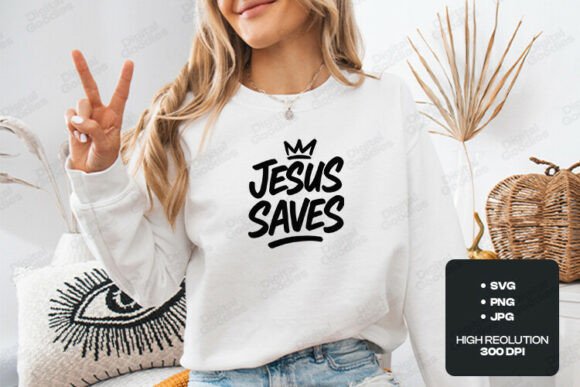
When I opened the Jesus Saves Christian SVG Design for the first time, my eye went straight to its balance—simple yet intentional. It’s not ornate, but it doesn’t need to be. The lettering is strong and legible at medium scale, with gentle curve consistency and even spacing. There’s no excessive embellishment, no distracting flourishes—just clarity and quiet conviction. That makes it instantly useful for real embroidery work, especially when you’re designing for people who want faith expressed with sincerity, not spectacle.
Real Project Test: Embroidering a Linen Kitchen Towel for a Small Shop Launch
Last week, I used the Jesus Saves Christian SVG Design on a natural linen tea towel for a local boutique’s Easter collection. Linen’s texture can swallow fine details, so I chose a moderate hoop size (5” x 7”) and paired it with medium-weight cutaway stabilizer. The result? Crisp satin-stitched outlines, clean fill-stitch letters, and zero thread nesting—even on the “S” in “Saves,” which often trips up dense letterforms. Customers responded well: one said it felt “like something made for her kitchen, not mass-produced.” That’s the quiet power of this design—it lands as handmade, not templated.
Where It Shines—and Where It Needs Thought
The Jesus Saves Christian SVG Design works beautifully on stable, medium-weight fabrics: cotton sweatshirts, canvas tote bags, twill aprons, and baby-knit onesies (with light tear-away stabilizer). It reads clearly at 3.5”–4.5” wide—ideal for chest placements on tees or centered front panels on toddler hoodies. As a tote bag design, it holds presence without overwhelming the fabric. As sweatshirt embroidery, it adds warmth and intention without looking stiff or corporate.
But here’s where attention matters: avoid using it below 2.75” wide unless you’ve tested stitch density thoroughly. Tiny lettering risks skipped stitches on stretchy knits or fuzzy fleece. On dark fabric, stick with high-contrast thread—cream or bright white over navy or charcoal gives excellent readability. And while it’s not an applique design, don’t force it into layered fabric builds (like quilted patches) unless you simplify the fill areas first—dense fill stitch zones can pucker if sandwiched between layers.
Design Personality Meets Practical Use
This isn’t a flashy machine embroidery design built for social media scrolls. It’s grounded. That means it builds trust—not hype. When customers see it on a personalized gift or small shop product, they read sincerity first, branding second. For Etsy sellers and craft business owners, that translates to repeat buyers and word-of-mouth referrals. I’ve seen similar designs fall flat when over-digitized—too many decorative elements, inconsistent stitch types—but this one stays focused. Its restraint makes it adaptable across seasons: equally fitting for a baptismal blanket, a Father’s Day polo, or a Christmas market mug cozy.
Embroidery Designer Notes You’ll Actually Use
- Always test on scrap fabric first—especially if stitching on textured weaves like burlap or terry cloth. Linen and chambray behave differently than smooth poplin.
- Check thread color contrast before finalizing. This design relies on legibility, not ornamentation—so mismatched thread (e.g., light gray on heather gray) weakens impact fast.
- Review stitch density in your embroidery software. If the file includes heavy underlay or double-run satin edges, reduce density slightly for lightweight cotton or baby items.
- Confirm hoop size compatibility before prepping a production run. Some versions may push close to 5” width—fine for standard hoops, tight for compact machines.
- Inspect small details manually: the crossbar on the “A”, the curve of the “J”, and spacing between “Jesus” and “Saves”. These define professionalism in finished product photos.
- Test in black-and-white mockups—not just color. Many buyers browse Etsy or Instagram in grayscale mode or low-light settings.
- Compare light vs. dark fabric backgrounds in your digital preview. What reads cleanly on white may vanish on black without thread adjustment.
- Use proper stabilizer: cutaway for knits, tear-away for wovens, and lightweight fusible for delicate baby items.
- Verify licensing terms before selling finished items or listing the digital embroidery file as part of a bundle. Not all SVGs include commercial rights.
Fitting Into Your Creative Workflow
If you’re curating design assets for a growing craft business—or building a consistent line of faith-based merchandise—the Jesus Saves Christian SVG Design fits neatly into a thoughtful collection. It pairs well with minimalist crosses, subtle doves, or handwritten scripture snippets—but shouldn’t be crowded with them. Its strength is in standing alone. As a custom apparel option, it adds meaning without clutter. As a personalized gift, it feels chosen, not generic. And for holiday embroidery or nursery decor, it brings reverence without rigidity.
Final Thought: It’s Not Just a Design—It’s a Delivery Method
At its core, the Jesus Saves Christian SVG Design is a delivery method for message and meaning. That puts extra weight on execution. A poorly stitched version—fuzzy edges, uneven tension, or muddy thread—doesn’t just look unprofessional; it dilutes the intent. But done right—with care, testing, and respect for both craft and context—it becomes more than decoration. It becomes something someone reaches for on their morning coffee towel, wears proudly on a volunteer shirt, or gifts with a handwritten note. That’s the mark of a truly functional, human-centered embroidery project. And that’s why this one earned a permanent spot in my working library.