Holy Trinity Engine Jesus Mechanic T-Shirt Designs
First Impression: Bold, Conceptual, and Niche-Ready
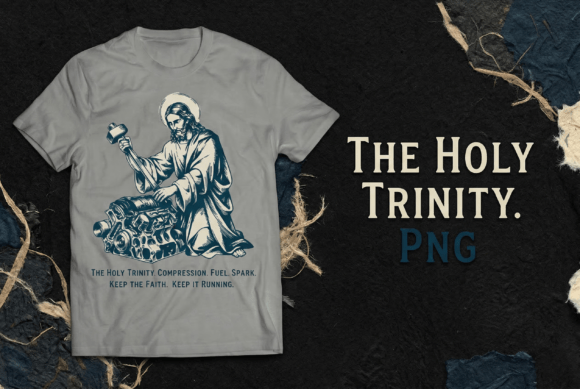
Opening Holy Trinity Engine Jesus Mechanic for the first time, I immediately noticed its strong visual contrast—mechanical gears interwoven with sacred geometry and subtle Christological symbolism. It’s not whimsical or minimalist. It’s a conceptual graphic design asset that leans into theological curiosity with industrial texture. The mood is reverent but inventive—less “church bulletin” and more “faith-forward maker space.” That makes it ideal for sellers targeting spiritually minded creatives: theology students, Christian STEM educators, apologetics podcasters, and faith-based small business branding.
Where This Design Fits—and Where It Doesn’t
Holy Trinity Engine Jesus Mechanic works best when used intentionally—not as filler, but as a statement piece. I tested it across several real product formats:
- T-shirt designs: Prints cleanly on black or heather grey tees; the gear outlines hold up well at 10–12 inches wide.
- SVG designs for Cricut projects: Cut lines are crisp and layered logically—no overlapping paths or stray nodes. Perfect for vinyl decals on mugs, tumblers, or tote bags.
- PNG design files: Transparent background is fully clean (no fringing), and resolution holds at 300 DPI up to 16x20 inches—ideal for printable wall art or nursery prints with intentional spiritual themes.
- Sublimation design use: Works on ceramic and polyester blends, though I recommend avoiding full-bleed placements—the detail in the central emblem benefits from breathing room.
- Canva templates and social media graphics: Scales cleanly as a focal element in Instagram carousels or blog headers, especially when paired with serif or display fonts that echo its structured elegance.
Real Shop Testing: From Mockup to Marketplace Listing
I added Holy Trinity Engine Jesus Mechanic to a test collection for my Etsy shop launching next month—focused on “Faith + Function” digital downloads. Here’s what I did before publishing:
- Ran it through three t-shirt mockups (front chest, full front, sleeve accent) to assess visual hierarchy and thumbnail appeal.
- Previewed it as a 400x400px Etsy thumbnail—still legible, though the fine gear teeth soften slightly. Not a dealbreaker, but I’ll pair it with a bold title tag like “Theological Engineering Art.”
- Test-printed on white and dark cardstock using my home printer—contrast held on both, but the emblem’s inner linework gained clarity on white stock.
- Imported the SVG into Cricut Design Space and ran a cut simulation—clean separation between layers, no hidden groupings. No cleanup needed.
- Added it to a Canva template bundle for church volunteers—used it as a header icon alongside editable scripture text boxes. Clients loved the cohesive, non-cliché aesthetic.
Strategic Uses Across Your Product Line
This isn’t just a single-use t-shirt design. As a commercial design, Holy Trinity Engine Jesus Mechanic adds depth to multiple categories:
- Printable design bundles: Combine with liturgical calendar printables or Bible journaling kits—its tone supports reflection, not decoration.
- Digital paper packs: Works as a subtle watermark or corner motif in faith-themed scrapbooking kits.
- Greeting cards & invitations: Scale down to 2.5 inches for baptism or confirmation announcements—pair with a classic script font for warmth.
- Product mockups: Use it in lifestyle shots—on a coffee mug beside an open theology textbook, or on a laptop sleeve in a co-working photo. It signals intentionality.
- Brand identity elements: For pastors launching podcasts or ministries building merch lines, this serves as a memorable logo alternative—especially when simplified to monochrome.
Cautions Before You List
Holy Trinity Engine Jesus Mechanic demands thoughtful placement. Avoid using it:
- In tiny sticker designs under 1 inch—gear details blur, losing symbolic impact.
- On busy backgrounds or patterned packaging—its strength is contrast, not camouflage.
- In text-heavy Canva templates where it competes for attention—let it breathe as a standalone visual anchor.
- For low-resolution print products (e.g., 72 DPI web banners)—the line weight loses definition.
- Without verifying commercial license terms—this is a commercial design, but always confirm redistribution rights if bundling with third-party fonts or assets.
Seller Notes You’ll Actually Use
Before uploading Holy Trinity Engine Jesus Mechanic to Creative Fabrica or Shopify:
- Test transparency on both light and dark mockups—PNG files must render cleanly without halo artifacts.
- Check SVG layer naming—mine was clearly labeled (“Emblem,” “Gears,” “Trinity Symbol”), which helps customers customize in design tools.
- Organize files by format: one folder for PNG (3 sizes), one for SVG (with vector preview), one for sublimation-ready JPGs.
- Pair typography wisely: serif fonts (e.g., Playfair Display) reinforce gravitas; sans serifs (e.g., Montserrat) modernize it for youth ministry branding; avoid overly decorative scripts—they clash with mechanical precision.
- Include a short usage guide—even one sentence like “Best scaled 8–14 inches for apparel; ideal for faith-based educational or creative small business branding”—builds trust and reduces support requests.
Final Verdict for Digital Product Sellers
Holy Trinity Engine Jesus Mechanic isn’t mass-market—but that’s its advantage. In saturated marketplaces like Etsy or Redbubble, distinctiveness drives clicks, repeat buyers, and brand recognition. It’s a high-intent graphic design asset: buyers searching for “theology art,” “Christian engineering gifts,” or “apologetics merch” will recognize its voice instantly. Used thoughtfully—as part of a cohesive digital download, a curated POD collection, or a handmade business’s visual language—it elevates perceived value far beyond a generic t-shirt design. Just remember: its power lies in context, clarity, and careful execution—not volume.